
Open source, community-driven technologies—projects designed with, not just for, the communities they serve—are essential building blocks of a better internet future. When people design and build for the problems they understand best, the results serve community needs more effectively and equitably.
However, these critical technologies face a systemic challenge: they consistently fail to cross the threshold from promising prototype to sustainable project.This "valley of death" claims countless innovations that could offer genuine alternatives to dominant technology paradigms.
This challenge is particularly acute for open source projects addressing the climate crisis and other pressing challenges. At a moment when Europe urgently needs ecologically sustainable technology solutions, the very projects that could help achieve climate targets may be struggling to find organisational sustainability. The market doesn't yet adequately support mission-driven technologies, even as policymakers recognise their strategic importance.
Traditionally, when the open source community talks about sustainability, we mean the long-term organisational model of the project. At Mozilla Foundation, we are focused on supporting open source, community-led projects addressing our greatest challenges like contributing to achieving climate targets. We need open source projects that can survive and thrive organisationally so they can deliver on their environmental mission at scale.
Europe's Twin Transition, a call for open source
According to the European Environmental Agency, Europe is the world’s fastest warming continent. European policymakers know that they need to address the green and digital transitions together. The Twin Transition was a cornerstone of the 2020 Commission Work Programme, and in the current Commission, Executive Vice-President Teresa Ribera Rodríguez, Commissioner for a “Clean, Just, and Competitive Transition”, is mandated to lead Europe towards ecological sustainability, technological innovation and social justice all at once.
Meanwhile, European policymakers across the institutions no longer take it for granted that digital is always green; they are now also grappling with how to address the environmental impact of technology itself. Through upcoming initiatives like the Cloud and AI Development Act and the Strategic Roadmap for Digitalisation and Artificial Intelligence, the Commission is setting out its aims for the energy efficient and sustainable use of technologies.
Europe's climate imperatives and digital resilience goals must reinforce each other. Certain digital technologies will be critical for the EU to meet its climate targets—from smart grids to emissions monitoring to resource optimisation. Meanwhile, intelligent software, efficient computing, and increased transparency can help in reducing the energy impact of our technology solutions across sectors.
Our digital technologies themselves must advance, not compromise, our environmental goals. In the EU and around the world, concerns are mounting about the resource consumption of tech, especially given the rise of generative AI, which is dramatically more resource intensive than other forms of computing. Alongside the growth of cloud computing, this trend puts international and European climate targets at risk. Rising energy demand and emissions will impact grid resilience and energy prices, and the availability of clean energy for other sectors and for domestic use.
Open source as an approach is uniquely positioned to help the EU achieve its digitalisation and climate targets, and to do so in a manner that ensures its strategic autonomy and resilience. Open source is underpinned by the belief that projects which are built, maintained, and continually improved by communities are stronger and more innovative than those held behind lock and key, and that they will respond more precisely to the needs of their communities.
Open source is also driven by the logic that no one should waste effort unnecessarily if something can be shared or repurposed, and that software is made more effective and more efficient through widespread adoption. Put another way, inefficient energy consumption is a bug that many eyes can help to fix.
At Mozilla Foundation, we believe open source is a strategic approach to realise the Twin Transition. But to get there, we will also have to ensure that relevant open source projects make it through the valley of death. In this sense, environmental sustainability and project sustainability go hand in hand.
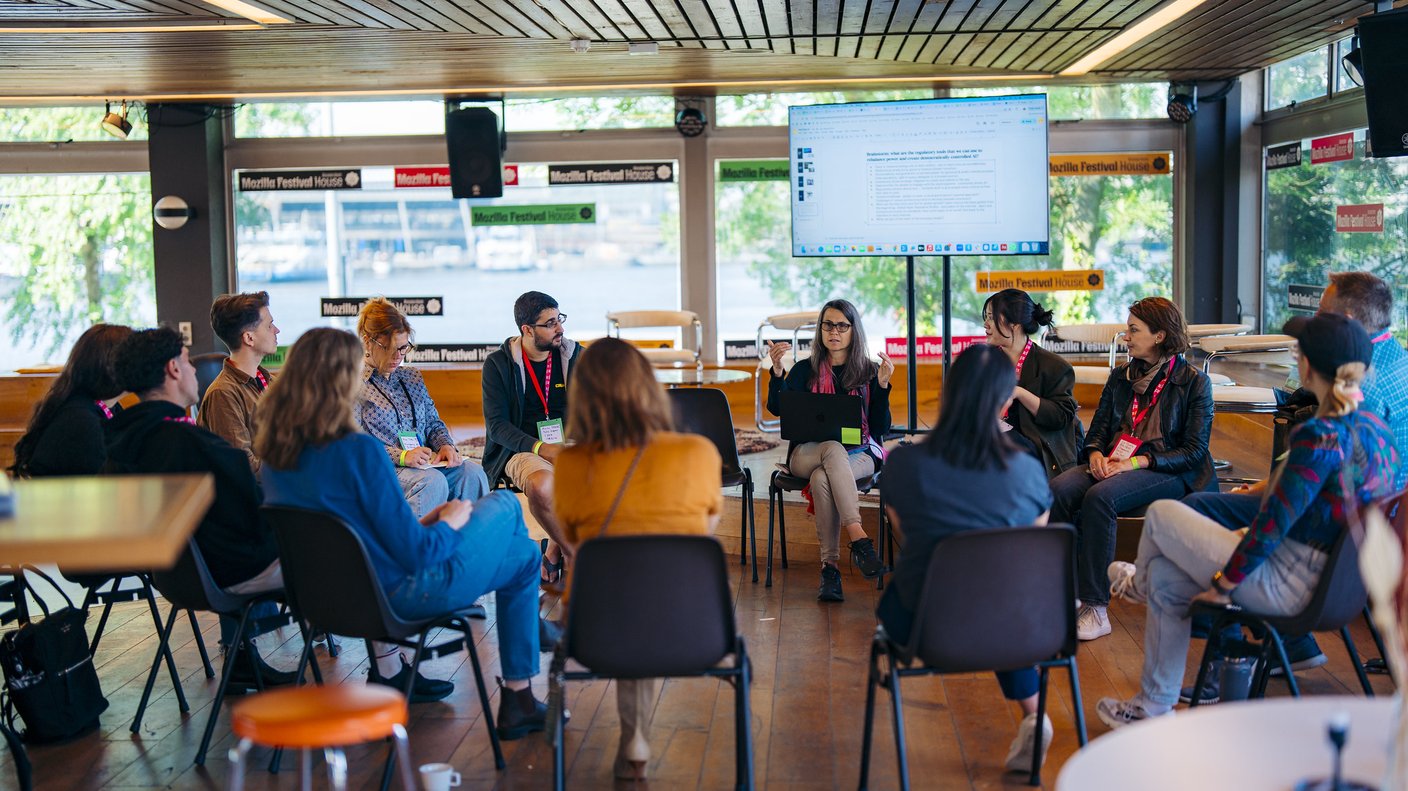
Mozilla Foundation's grantmaking at the intersection of climate and tech
For over 25 years, Mozilla has championed the principle that the internet should be a public resource, open and accessible to all. We built Firefox as a community-powered alternative at a moment when proprietary browsers threatened web openness. And through the work of Mozilla Foundation, the nonprofit behind Firefox, we’ve fueled an ecosystem that helps mission-aligned technologies beyond Firefox survive and thrive.
During the last decade, Mozilla Foundation's grantmaking has supported open source technologists whose work is helping to build a better tech future by working on issues like reducing the bias in and increasing the transparency of AI, and more recently addressing the critical data and transparency gap around AI's environmental impact.
For example, through our Mozilla Technology Fund and partnerships like the Green Screen Coalition, we've funded projects that make the invisible visible. CodeCarbon, a French open source project, enables developers to estimate the energy consumption and carbon emissions of their code by measuring hardware electricity consumption and combining it with regional carbon intensity data.Zeus allows for energy measurement and optimization of modern machine learning systems. Green Coding Solutions evaluates energy consumption in the Linux Kernel at the process level. These projects demonstrate that systematic measurement of software emissions is achievable, and that open source provides the transparency developers and policymakers need for informed decisions on resource allocation and trade-offs.
Helping open source projects survive the 'valley of death': launching the Mozilla Foundation incubator
Through this work, we observed a consistent pattern: promising open source projects with real technical capability and genuine community need consistently struggle at a specific inflection point—the transition from promising prototype to sustainable project. This “valley of death” claims countless innovations that could serve the public good.
Traditional funding models push projects toward premature commercialisation or expect them to achieve sustainability through volunteer effort alone. Neither approach adequately serves mission-driven technologies, especially those addressing challenges like those in the twin transition, where public value may not align with immediate market returns.
Based on these learnings, Mozilla Foundation is launching an Incubator specifically designed to holistically support open source projects at this pivotal stage. We're bridging the gap between promising prototype and sustainable project, strategically directing our philanthropic risk capital to create pathways where none currently exist.
Our approach differs from traditional accelerators fundamentally: we focus on product-community fit rather than product-market fit. Traditional profit-driven models push projects toward rapid growth, commercialisation and market validation, often forcing compromises that undermine community values. For mission-driven open source projects, the sustaining resource isn't necessarily paying customers;it's a community of users, contributors, maintainers, collaborators, and aligned funders who believe in the project's public value.
We will help projects identify and build the specific communities they need to achieve their goals without compromising their values. We remain agnostic about organisational form-a project might become a nonprofit, a for-profit social enterprise, or a volunteer-run community effort. What matters is getting past the valley of death to sustainability at the scale optimal for impact, to help address the issues that matter most.
In this case, what we want is to ensure that open source software remains a driver of the Twin Transition. It should bring transparency and innovation in service of environmental sustainability, without mission compromise, and with sustained influence.
Read more about the new incubator
About the Authors
Lisa Gutermuth is a Senior Program Officer at the Mozilla Foundation where her work focuses on enabling community-centered tech projects move from prototype to sustainable project. Lisa is also Mozilla's representative member for the Green Screen Coalition, which seeks to build out the intersection of digital rights and climate justice, as well as the European AI & Society Fund.
Claire Pershan is the is the Mozilla Foundation’s Brussels based Advocacy Lead. She connects Mozilla Foundation’s community to policy discussions that affect them and to which they can contribute, in particular in the areas of data agency, privacy, and the open web.