

This article presents a case study of the "Conseil National du Logiciel Libre" (CNLL), France’s representative body for the open source business sector. From our founding in 2010, our organisation has undergone a significant evolution, transitioning from a nascent federation of regional clusters of small and medium-sized enterprises (SMEs), into a strategic actor in national and European digital policy.
We argue that this maturation was not accidental but the result of a deliberate,multi-phase strategy focused on three pillars: first, building a coherent industrial identity through federation; second, developing instruments of influence based on empirical data and targeted legal action; and third, scaling our advocacy to engage with complex European regulations.
Our experience offers a transferable model for how national open source ecosystems can organise to achieve substantive policy recognition and contribute to a more resilient European digital economy.
Phase I (2010-2015): From regional strengths to a federated force
By 2010, France already possessed a vibrant open source ecosystem, with dynamic business clusters in several regions, some counting over a hundred members. This regional vitality was our core asset, but our fragmentation was a weakness. To confront a market defined by systemic vendor lock-in, which limited opportunities for our members and constrained client autonomy, our initial objective was not political influence but industrial organization. The CNLL was formed as a federation of ten of these regional clusters to create a unified entity that could aggregate this regional power and project it onto the national stage.
This foundational phase was characterised by internal ecosystem development, organising events like the "Printemps du Libre" ("Open Source Spring") to foster a shared industrial consciousness. This internal cohesion provided the necessary platform for our first forays into public policy.
Ahead of the 2012 presidential election, we engaged all major candidates with a detailed questionnaire, successfully positioning open source as a topic of political relevance. This effort contributed to the issuance of the "Ayrault Circular" in September 2012, a key administrative directive that formally encouraged the use of free software within the French administration.
Our legislative efforts during this period taught us that progress is rarely linear, and that securing policy is a multi-front battle. A hard-fought campaign to embed our principles in the "Loi sur la refondation de l'école" (School Refoundation Act) resulted in failure, defeated by powerful, concerted pushback from incumbent lobbies, notably AFDEL (a software vendor association heavily financed by Microsoft) and Syntec Numérique. Yet, this defeat was followed by a landmark success in 2013, when we successfully advocated for an amendment to the law on Higher Education and Research (ESR), which enshrined the principle that "free software is to be used in priority."
In 2016, our engagement with the Digital Republic Law yielded a more complex, partial success. We secured Article 16, which mandates that public bodies must "encourage" the use of free software to preserve the "maîtrise, pérennité et indépendance" (mastery,
sustainability, and independence) of their information systems. The law's fatal flaw, however, was that this "encouragement" came with no enforcement mechanisms. To make things worse, no significant budget or dedicated team, and no substantial operational support was ever allocated to translate this principle into practice.
This vacuum ensured that the default behavior—procuring familiar U.S. solutions—continued unabated. This phenomenon has a name in French policy circles: corruption des esprits, or a 'corruption of the mind.' It describes a deep-seated institutional bias where decision-makers, saturated by decades of marketing and lobbying, reflexively equate dominant, non-European solutions with quality and inevitability, even when superior local alternatives exist. Article 16 gave us a legal argument for sovereignty, but it did nothing to cure the underlying condition.
This period also culminated in a strategic rebranding of our members from "SSLL" (Société de Service en Logiciel Libre, or Free Software Service Companies) to "ENL" (Entreprise du Numérique Libre, or Digital Open Businesses). This was a move designed to dismantle a persistent and damaging misconception: that sustainable business in open source is limited solely to service delivery.
By championing a term that encompassed software vendors, integrators, and consultants alike, we were making a clear economic statement that product-based and hybrid models are also central to our industry’s value proposition.
Phase II (2015-2019): Developing instruments of influence
Having established a coherent identity, our next phase focused on building the tools necessary for sustained and effective advocacy.This involved a deliberate shift towards an evidence-based approach and a more assertive defense of our sector's interests.
First, we prioritised economic quantification.We began commissioning regular, independent market studies to empirically measure our sector's contribution to the national economy. Our 2015 study, conducted with Pierre Audoin Conseil (PAC), estimated the French Open Source market at €4.1 billion, employing 50,000 people. Subsequent studies confirmed this trajectory, with the market reaching €4.5 billion by 2017 and over €5 billion by 2019.
This data allowed us to frame our arguments not in terms of technological preference, but in the language of economic growth, job creation, and industrial competitiveness. Our sector’s growth rate consistently doubled that of the overall IT market, a fact that gave our policy recommendations significant weight.
Second, we demonstrated a willingness to engage in legal and public confrontations to uphold principles of fair competition and open standards. Two cases are illustrative. In 2015, through the "Edunathon" collective, we initiated legal action against a major partnership between the Ministry of National Education and Microsoft, arguing it violated public procurement law and distorted the educational technology market.
In 2019, we publicly challenged the French patent office (INPI) for mandating the proprietary .docx format for submissions, a clear violation of the government's own General Interoperability Framework (Référentiel Général d'Interopérabilité or RGI v2), which recommended the open standard ODF. These actions established our reputation as a vigilant watchdog, willing to hold public institutions accountable.
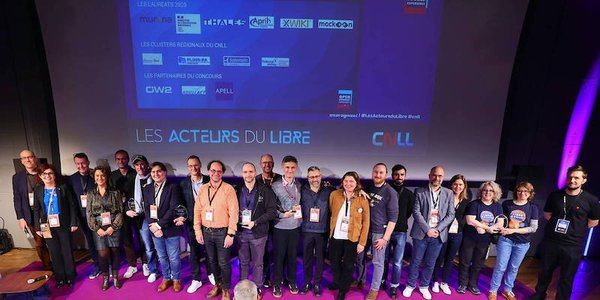
Third, we created platforms to promote the successes of our ecosystem.The annual "Acteurs du Libre" awards were established to recognize excellence in open source strategy, commercial development, public-private collaboration, and other categories established subsequently, providing tangible examples of the sector's maturity and innovation.
Phase III (2020-Present): Engaging with strategic regulation on the European stage
The current phase of our evolution is defined by two major shifts: the centrality of "digital sovereignty" in the political discourse and the increasing locus of determinative regulation at the European level. Having spent a decade advocating for what we then called "technological independence" and "autonomy," we were well-prepared for this new strategic context.
Our engagement with the EU's Cyber Resilience Act (CRA) exemplifies our matured approach. Our initial analysis identified the proposed regulation as a significant threat to the open source development model, with the potential to impose disproportionate compliance costs on SMEs - costs the European Commission's own impact assessment estimated could be as high as 30% of development expenses.
Our response was multi-faceted. We published detailed position papers, engaged in direct lobbying with French and EU officials, and coordinated our actions with European partners through APELL, the European federation of like-minded open source business organisations we co-founded in 2020.
Additionally, we moved beyond opposition to constructive engagement. Recognising the legitimacy of the regulation's security objectives, we commissioned a "CRA Compliance Guide" in late 2024. This guide provides practical, actionable advice for open source actors to navigate the new legal framework. This proactive stance demonstrated our industry's commitment to security and positioned us as a necessary partner in the implementation of the regulation.
This strategic posture now informs all our high-level advocacy. Our legal challenges to the hosting of the national Health Data Hub on Microsoft Azure were framed as an analysis of the data security risks under extraterritorial laws like the US FISA and CLOUD Act. This shift from defense to offense is best embodied by our support for industry-led, bottom-up initiatives. Beyond our work with APELL, we are active supporters of the EuroStack initiative. Its formal mission is to promote "the sustainable growth of the digital economy in Europe and establish Europe's strategic independence from non-European digital infrastructures."
To this end, it has articulated a strategy, operationalised through three core pillars—'Buy European,' 'Sell European,' and 'Fund European'—all underpinned by 'openness as policy' as a foundational principle. Our support for this initiative is the modern expression of principles we have championed for over a decade: these 3+1 pillars directly echo many of the core tenets of our own "10 Propositions for an Industrial Policy for Free Software," first presented to the French government back in 2012.
Conclusion
The evolution of the CNLL over the past fifteen years demonstrates a clear trajectory: from internal federation to the development of sophisticated instruments for national influence, and finally to strategic engagement with European regulation.
Our market studies have been instrumental, providing the empirical foundation for our advocacy. Our latest data from 2022 pegs the French market at nearly €6 billion, with 64,000 jobs and a projected need for 26,000 new professionals by 2027, confirming France's status as a leading open source economy in Europe.
Our experience demonstrates that for an open source business ecosystem to achieve meaningful policy recognition, it must organise itself as a coherent industrial sector. It must ground its arguments in credible economic data, be willing to defend its market through targeted legal and public action, and possess the maturity to engage constructively with complex regulation at the highest political levels.
The core objective remains what it has always been: to secure a level playing field where open, transparent and interoperable technologies can thrive. Our journey in France offers a tested model for working towards that goal.
About the Author
Stéfane Fermigier is a French tech entrepreneur and a prominent open source advocate. He is currently the Founder and CEO of Abilian, a company that develops enterprise information management solutions with open source software. Previously, he founded Nuxeo in 2000.
A graduate of ENS Paris with a PhD in mathematics, Fermigier has been instrumental in fostering the open source ecosystem in France and Europe. He has co-founded and led several key organisations, including AFUL, GTLL, CNLL and APELL. He is also a co-founder of EUCLIDIA and EuroStack, and of numerous open source projects, mostly in Python.